The Future Of Brand Discovery In The Age Of AI
AI Brand Report ·
Brand discovery is shifting from search engines to AI assistants - and the transformation is accelerating. Here's how the landscape will evolve and what brands must do to remain visible in the discovery environments of tomorrow.
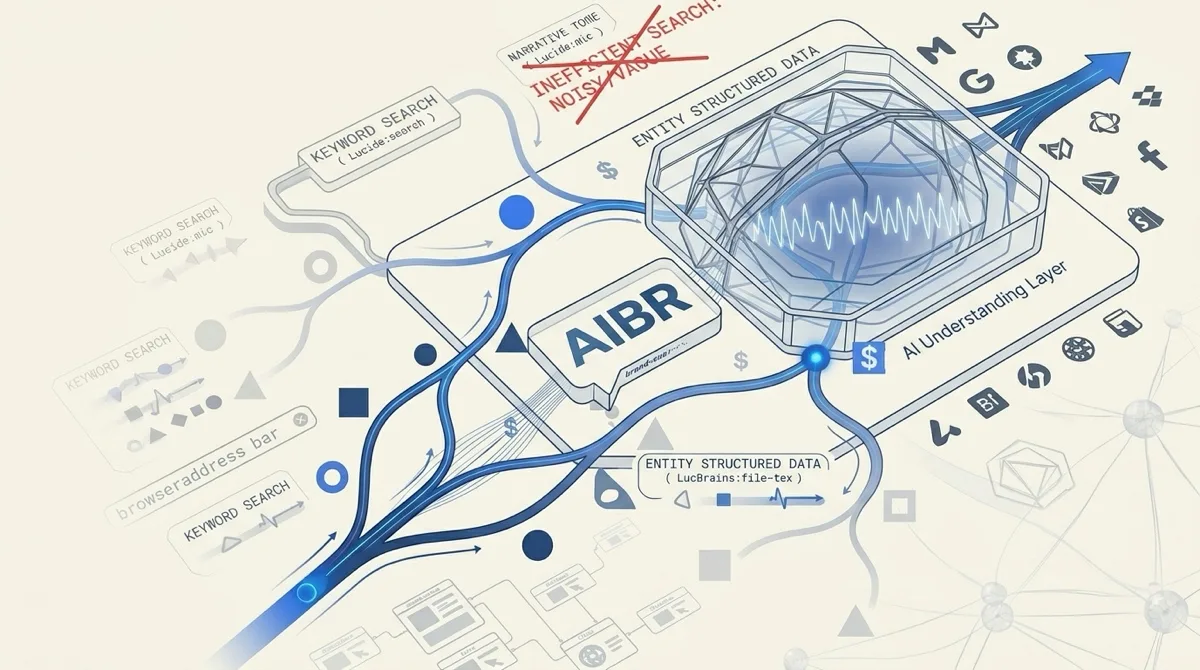
The way humans discover brands has changed more in the past three years than in the previous decade.
Search engines, which defined digital discovery for twenty years, are being supplemented - and in some contexts supplanted - by AI assistants that synthesize answers rather than present lists of links. Instead of browsing dozens of websites across multiple sessions, users increasingly consult a single AI assistant and receive a curated recommendation.
This shift is not a gradual evolution. For many users and many query types, it is already a reality. But the transformation is far from complete. The coming years will bring deeper integration of AI into discovery processes across categories, devices, and contexts - creating both significant risk and significant opportunity for brands that are paying attention.
What Is AI-Mediated Brand Discovery?
AI-mediated brand discovery refers to the process by which users find, evaluate, and develop consideration for brands primarily through AI assistants and generative search systems - rather than through direct browsing, traditional search, or advertising exposure.
In AI-mediated discovery, an AI system acts as an intermediary - interpreting user intent, synthesizing information from across the web, and presenting a curated response that includes brand recommendations, descriptions, and comparative context.
This is fundamentally different from traditional discovery in that the AI does the evaluation work that users previously did themselves. Users receive a pre-synthesized shortlist rather than a list of options to evaluate independently. The AI discovery funnel that results from this shift collapses awareness and consideration into a single moment - inside the AI response itself.
For brands, AI-mediated discovery means that AI Brand Visibility - how frequently and accurately AI systems represent your brand - is becoming the most important metric in digital marketing.
Why The Future Of Brand Discovery Matters Now
The Shift Is Already Underway In Key Categories
AI-mediated discovery is not a future scenario - it is a present reality in many categories. B2B software evaluation, travel planning, professional service selection, and consumer electronics research are among the areas already significantly influenced by AI recommendations.
Brands in these categories that have not yet invested in AI Brand Visibility are already experiencing the competitive consequences.
Early Investment Builds Durable Advantages
The brands that begin investing in AI visibility now - building strong signal landscapes, consistent narratives, and monitoring capabilities - will establish advantages that compound over time. AI brand monitoring data shows that brands with established knowledge graph presence and strong third-party authority signals maintain their recommendation position more durably than brands that rely on shorter-term tactics.
The Window For First-Mover Advantage Is Closing
In most categories, AI-driven discovery is still in its early stages. Brands that act now have the opportunity to establish dominant positions in AI recommendation landscapes before those positions are contested and entrenched. Waiting for AI discovery to become "mainstream" in a category often means waiting until competitive positions are already established.
How Brand Discovery Will Evolve
Voice And Conversational Discovery Will Grow
AI-powered voice interfaces are becoming more capable and more widely used. Discovery through voice - asking a smart speaker, a smartphone assistant, or an AI-integrated device for recommendations - will increasingly supplement and in some cases replace text-based search.
Voice recommendations have a critical characteristic: they present far fewer options than text-based results. A voice response might recommend two or three brands; a traditional search results page might show ten. This makes inclusion in voice recommendations even more critical than inclusion in text search - and raises the stakes for brands that are not in the AI shortlist.
AI Will Be Integrated Into More Discovery Surfaces
AI recommendation capabilities will be integrated into more of the surfaces where users currently search: e-commerce platforms, productivity tools, professional networks, vertical search engines, healthcare portals, financial planning tools, and industry-specific platforms.
Each new integration creates a new discovery environment where AI brand visibility matters. Brands with strong, consistent signal profiles will carry their advantages across multiple surfaces simultaneously.
Personalization Will Deepen AI Discovery
As AI systems access more personal context - professional profile, stated preferences, past interactions, organizational context - their recommendations will become increasingly personalized.
This creates new dynamics: the same category query might produce different recommendations for different users based on context. Brands that signal relevance to specific audiences and use cases - through targeted content, use-case-specific positioning, and audience-specific coverage - will gain advantages in personalized discovery environments.
Zero-Click Discovery Will Expand
AI summaries increasingly resolve queries without requiring any click to a source website. Users receive the synthesis they need - the brand shortlist, the comparison, the recommendation - entirely within the AI interface.
This expands the phenomenon of zero-visit brand discovery: users forming opinions about brands, developing consideration sets, and even making purchasing decisions based entirely on AI summaries. Brands must design for recognition and consideration that doesn't depend on a website visit.
Practical Strategies To Prepare For The Future Of Brand Discovery
Treat AI visibility as a core marketing metric. Organizations that want to compete in the AI era must begin measuring AI brand visibility systematically - tracking how frequently your brand appears in AI responses across a defined set of relevant queries. You cannot manage what you cannot measure. Start with AI brand monitoring if you haven't already.
Build the infrastructure for AI brand presence. AI brand presence is built on several foundations: clear, consistent brand narrative across all channels; strong third-party authority signals (media coverage, reviews, expert mentions); accurate structured data implementation; consistent category association signals; and active monitoring and optimization capability. These are ongoing programs, not one-time projects.
Invest in earned media and authority building. As AI systems weight independent sources heavily, earned media - genuine coverage in respected publications - becomes increasingly valuable. PR has become the new SEO in the AI era, and this dynamic will only intensify as AI discovery grows. PR, thought leadership, and expert positioning are fundamental to brand discoverability - not just brand awareness.
Strengthen your brand narrative for AI synthesis. Because AI systems reproduce brand descriptions from distributed signals, your narrative must be designed to be synthesizable. It should be clear, consistent, differentiating, and expressed in specific category language that can be accurately reproduced in an AI summary of three to five sentences.
Build category authority before the category saturates. In most categories, there is still time to establish strong AI recommendation positions before they become contested. Identify the queries where you need to appear, assess your current visibility, and invest in the signals that drive inclusion - structured data, third-party authority, and narrative consistency.
Design for comparison contexts. AI users frequently ask comparative questions. Brands that appear prominently in comparison content, "best of" lists, and competitive overviews build stronger AI discovery presence. Invest in creating and earning comparison context that positions your brand clearly within its competitive landscape.
Examples
The Early Mover: A professional services firm in a relatively niche B2B category begins investing in AI brand visibility in early 2025, before their category is significantly AI-mediated. They build strong structured data, earn coverage in the three publications that are most authoritative in their space, ensure consistent directory listings, and begin monitoring AI recommendations monthly. When AI discovery begins to significantly influence their category in late 2025, they are already well-positioned - appearing consistently in AI recommendations and building prospect familiarity through zero-visit AI exposure. Competitors who wait until AI discovery is clearly affecting pipeline must invest significantly more to displace an established position.
The Category That Shifted Overnight: A travel brand watches as AI assistant adoption accelerates among their target demographic - affluent travelers who increasingly ask AI assistants for destination and accommodation recommendations rather than browsing traditional travel sites. The brands that had invested in consistent review profiles, accurate directory listings, and strong editorial coverage found themselves appearing in AI recommendations. Brands with weak third-party signals found their discovery dramatically reduced, seemingly overnight, as a key user segment shifted its discovery behavior.
Key Takeaways
- AI-mediated brand discovery is already the reality in key categories and will expand significantly across all sectors
- Voice AI, personalized recommendations, and zero-click discovery will deepen the AI discovery shift in the coming years
- Early investment in AI brand visibility builds durable competitive advantages that compound over time
- The core preparation strategies are: AI visibility measurement, signal infrastructure building, earned media investment, narrative engineering, and comparison context development
- The window for first-mover advantage in AI discovery is closing - brands that act now establish positions that will be harder to contest later
- Brands that cannot be found in AI summaries risk becoming invisible to the most important discovery interface of the next decade
Frequently Asked Questions
What should you check first?
Start by testing the prompts your buyers are most likely to ask. Look for whether your brand appears, how it is described, which competitors appear beside it, and whether the answer points to credible sources.
How often should teams review this?
Monthly is the minimum useful cadence for most teams. Weekly reviews make sense during launches, competitive campaigns, PR activity, or any period where AI-generated answers could shift quickly.
How can AI Brand Report help?
AI Brand Report runs structured prompt checks across major AI engines, tracks brand and competitor visibility, and turns the results into a prioritized list of actions so your team can improve how AI systems describe and recommend your brand.
Check Your AI Visibility
If you want to see how AI systems describe and recommend your brand today, start with a free AI visibility report. AI Brand Report checks your presence across major AI engines, compares your visibility against competitors, and highlights the gaps most worth fixing first.
Get your free AI visibility report.
Related Articles
-
AI Brand Visibility: The Complete Guide To Being Recommended By AI Systems - The comprehensive framework for managing your AI brand presence
-
The AI Discovery Funnel - How AI reshapes the customer journey from first intent to conversion
-
AI Brand Monitoring - How to systematically measure and track your AI brand presence
-
The Rise Of AI Recommendation Engines - How AI systems function as recommendation engines across every industry
-
Generative Engine Optimization (GEO) - The discipline of optimizing brand presence for AI-generated answers
-
Why PR Is The New SEO In The Age Of AI - Why earned media is becoming the most important driver of brand discoverability