Why PR Is The New SEO In The Age Of AI
AI Brand Report ·
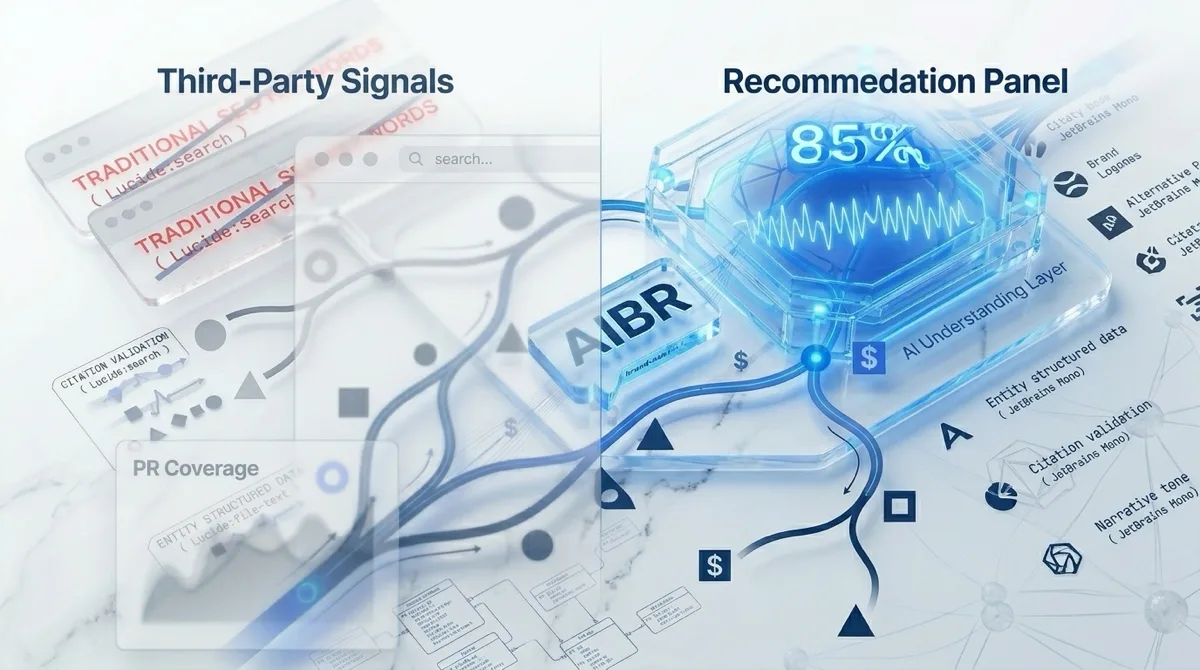
AI systems weight third-party coverage far more heavily than self-published brand content. The implications for marketing strategy are significant - and PR is moving to the center of AI brand visibility.
For years, PR and SEO occupied largely separate strategic lanes.
SEO was a technical discipline: keywords, rankings, backlinks, and page optimization. PR was a communications discipline: media relationships, story placement, and brand narrative management. They overlapped at the edges - particularly around link building and brand awareness - but operated with different tools, different metrics, and often different teams.
In the AI era, this separation is collapsing.
AI systems weight third-party coverage from respected publications significantly more heavily than self-published brand content. This means that the coverage PR teams earn has a direct and measurable impact on a brand's AI recommendation frequency - making PR a core driver of AI Brand Visibility in a way it has never been before.
What Is PR's Role In AI Brand Visibility?
In the context of AI brand visibility, PR's role is to build the independent authority signals that AI systems use to evaluate and recommend brands.
When an AI assistant decides whether to include your brand in a recommendation, it evaluates signals from multiple sources. Self-published content - your website, blog posts, case studies - contributes to this signal landscape, but it is weighted less heavily than independent sources. What respected third parties say about your brand matters more to AI systems than what your brand says about itself.
PR is the discipline that earns those third-party signals. Every placement in a respected industry publication, every expert quote about your brand, every inclusion in an authoritative "best of" list contributes directly to the signal landscape that drives AI recommendation frequency.
Understanding how AI assistants choose which brands to recommend makes clear that third-party authority is not just helpful - it is the most powerful lever for improving AI brand visibility.
Why AI Systems Trust Third-Party Sources
AI models have learned - through training on vast quantities of web content - that brand websites are by definition not independent. They are curated, optimized, and designed to present the brand favorably. This inherent bias makes self-published content less credible as a signal source.
Third-party sources, by contrast, have editorial independence. A respected industry publication has no inherent reason to describe a brand favorably unless the description is warranted. This independence makes third-party coverage a stronger credibility signal - and AI systems reflect this in how they weight different source types.
When an AI system is deciding whether to include a brand in a recommendation, coverage in respected independent sources tips the balance toward inclusion. This is not a minor weighting difference. It is a fundamental principle in how AI systems evaluate brand credibility - one with major implications for how brands should allocate marketing investment.
Why PR Matters More Than Ever
The Evolution From Link-Building To Authority-Building
In traditional SEO, PR's primary contribution was through backlinks - links from high-authority publications that improved domain authority and search rankings. This created a transactional relationship: PR teams generated coverage, SEO teams tracked the links.
In the AI era, the relationship is more direct and more profound. AI systems don't just look at links. They understand content. They read the coverage, assess the authority of the publication, and incorporate the substance of what was written into their understanding of the brand.
A detailed profile of your brand in a respected industry publication doesn't just generate a link. It contributes a rich, authoritative description of your brand's positioning, capabilities, and credibility to the signal landscape that AI systems draw on - directly shaping how AI systems describe and recommend your brand.
The Substance Of Coverage Matters As Much As The Source
This distinction - from link-value to content-value - changes how PR should be approached in the AI era. Coverage that includes specific, accurate descriptions of your brand's positioning, category, use cases, and differentiators contributes more to AI brand understanding than brief mentions, regardless of publication authority.
The goal is not just to appear in publications. It is to appear with accurate, detailed, differentiating descriptions that AI systems can draw on when synthesizing brand summaries.
How PR Drives AI Brand Visibility
Building Authority Signals Across Trusted Sources
Each placement in a respected publication adds to the pool of authoritative signals that AI systems use to evaluate your brand. Consistent coverage across multiple trusted publications creates the pattern recognition that drives confident AI recommendations.
Brands with strong PR track records in their industries tend to have rich, confident AI descriptions. Brands with minimal third-party coverage tend to have sparse, vague, or absent AI descriptions - regardless of website quality or product strength.
Establishing Consistent Narrative Across Independent Sources
Brand narrative engineering - the practice of aligning all the signals AI systems use to describe your brand - depends critically on PR. While your website provides your self-description, PR coverage provides the independent reinforcement that makes that narrative credible to AI systems.
When multiple respected publications describe your brand using consistent positioning language - the same category, the same key differentiators, the same use cases - AI systems develop high confidence in that narrative and reproduce it consistently in recommendations.
Earning Inclusion In Category Comparison Content
Coverage that explicitly positions your brand within a competitive category is particularly valuable for AI recommendation engines. Inclusion in "best platforms for X," "top alternatives to Y," and "companies to watch in Z" directly populates the comparison signals that AI systems draw on when generating shortlists.
Prioritize PR opportunities that position your brand within its competitive category - not just standalone brand profiles, but comparative and category-level coverage.
Practical Strategies: Building A PR Strategy For AI Brand Visibility
Define your core narrative for AI. Before pursuing coverage, establish the narrative you want AI systems to reproduce. Identify the three to five key claims about your brand: your category, your primary use cases, your key differentiators, your target market, and your positioning relative to alternatives. Every coverage placement should reinforce these core narrative elements consistently.
Map publication authority in your category. Identify the publications that AI systems weight most heavily when generating answers in your industry. These are typically publications that are well-established, frequently cited, and recognized as authoritative within the space. Prioritize placing coverage in these publications - the effort to earn a single placement in a top-tier industry publication is justified by the disproportionate AI visibility impact.
Pursue systematic rather than episodic coverage. One-off placements - even in top publications - have limited lasting impact. AI systems are influenced by patterns across multiple sources over time. Build a systematic coverage cadence: regular placements across a portfolio of authoritative publications, maintained over months and years. This creates the consistent, multi-source signal landscape that drives strong AI brand visibility.
Earn inclusion in category round-ups and comparison content. Coverage that explicitly positions your brand within a competitive category - "best platforms for X," "top alternatives to Y," "companies to watch in Z" - is particularly valuable for AI visibility. Pursue inclusion in regular category round-ups, annual lists, and "best of" features in respected publications.
Leverage analyst and expert commentary. Coverage that includes quotes from analysts, experts, or recognized thought leaders about your brand carries additional authority signals. Cultivate relationships with analysts and industry experts who can provide genuine, credible third-party commentary about your brand's strengths - this type of endorsed coverage is among the most powerful AI authority signals available.
Connect PR investment to AI visibility measurement. Track your AI appearance rate - how frequently your brand appears in AI responses to relevant category queries - before and after significant PR campaigns. This measurement connects PR investment to the AI visibility outcomes it drives, making the relationship between earned media and brand discoverability visible and measurable. See our guide to AI brand monitoring to build this measurement capability.
Examples
The PR-Driven AI Visibility Gain: A B2B software company with limited media coverage rarely appears in AI recommendations for their category. They invest in a six-month PR program targeting the four publications most authoritative in their space, earning two feature placements, three product round-up inclusions, and one analyst commentary feature - all consistently describing their brand as a "workflow automation platform for mid-market operations teams." Six months later, AI monitoring shows they now appear among the top brands recommended for their primary category query - up from rarely appearing at all.
The Owned Content Trap: A competing company invests heavily in content marketing - a comprehensive blog, detailed case studies, multiple whitepapers. But with minimal third-party coverage, AI systems have limited independent authority signals to draw on. Despite strong website traffic from their content, they rarely appear in AI recommendations. Their owned content strategy drives direct traffic but does not build the third-party authority signals that drive AI recommendation frequency. Adding a targeted PR program alongside their content marketing is what eventually moves the needle on AI visibility.
Key Takeaways
- AI systems weight third-party coverage significantly more heavily than self-published brand content
- PR earns the independent authority signals that are the most powerful driver of AI recommendation inclusion
- The substance of coverage matters as much as the source - accurate, detailed, narrative-consistent descriptions contribute more than brief mentions
- A systematic PR cadence - regular placements across authoritative publications - builds more durable AI visibility than episodic campaigns
- Comparison and category coverage (inclusion in "best of" lists, round-ups) is particularly valuable for AI recommendation engines
- PR impact on AI visibility can and should be measured through AI appearance rate tracking before and after campaigns
Frequently Asked Questions
What should you check first?
Start by testing the prompts your buyers are most likely to ask. Look for whether your brand appears, how it is described, which competitors appear beside it, and whether the answer points to credible sources.
How often should teams review this?
Monthly is the minimum useful cadence for most teams. Weekly reviews make sense during launches, competitive campaigns, PR activity, or any period where AI-generated answers could shift quickly.
How can AI Brand Report help?
AI Brand Report runs structured prompt checks across major AI engines, tracks brand and competitor visibility, and turns the results into a prioritized list of actions so your team can improve how AI systems describe and recommend your brand.
Check Your AI Visibility
If you want to see how AI systems describe and recommend your brand today, start with a free AI visibility report. AI Brand Report checks your presence across major AI engines, compares your visibility against competitors, and highlights the gaps most worth fixing first.
Get your free AI visibility report.
Related Articles
-
AI Brand Visibility: The Complete Guide To Being Recommended By AI Systems - The comprehensive framework for managing your AI brand presence
-
How AI Assistants Choose Which Brands To Recommend - Why third-party authority is the most important recommendation signal
-
Brand Narrative Engineering For AI Systems - How PR fits within the broader narrative engineering strategy
-
Generative Engine Optimization (GEO) - The discipline of optimizing brand presence for AI-generated answers
-
The AI Knowledge Graph: How Machines Understand Brands - How PR coverage contributes to AI knowledge graph representation
-
AI Brand Monitoring - How to measure the impact of PR on your AI brand visibility