Brand Narrative Engineering For AI Systems
AI Brand Report ·
AI models synthesize your brand narrative from signals distributed across the internet. Companies that actively engineer this narrative will control how they are described - and who discovers them.
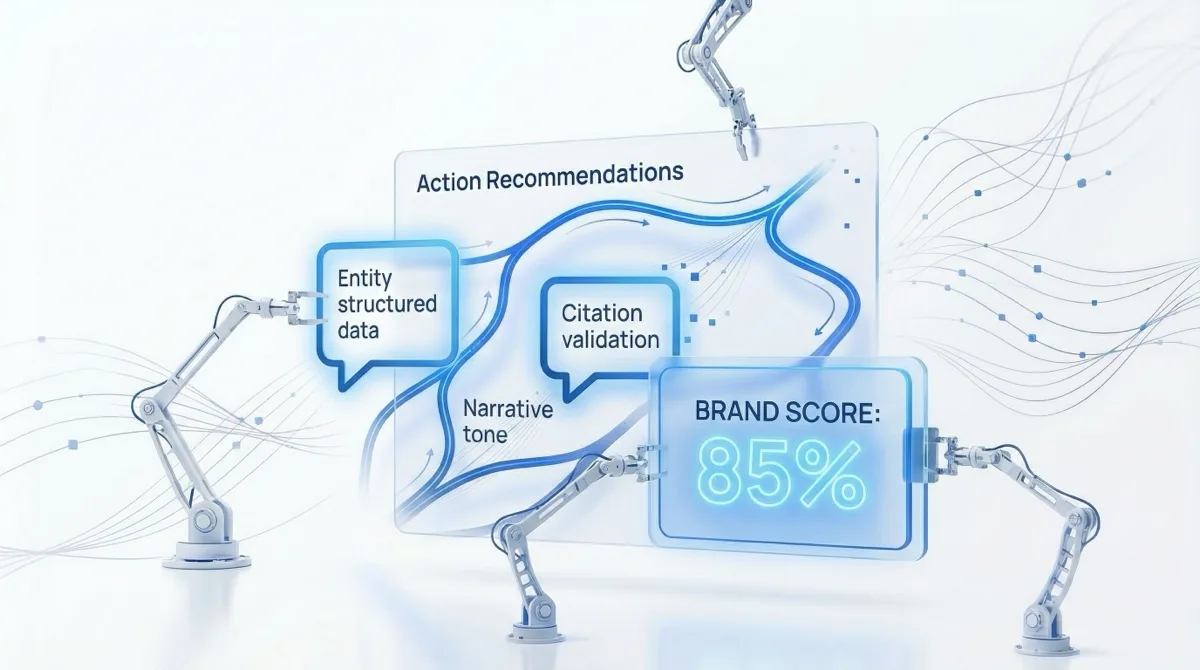
Every brand has a narrative that lives in the minds of customers, prospects, and the media. In the AI era, that narrative also lives inside AI systems - synthesized from signals distributed across the internet and reproduced every time a user asks a relevant question.
The challenge is that this AI-constructed narrative may not match the narrative you intend to project.
AI systems aggregate information from dozens of sources: your website, media coverage, reviews, directory listings, comparison sites, and community discussions. They synthesize these signals into a composite description - one that may be accurate, partially accurate, or significantly misaligned with your actual positioning.
Brand narrative engineering is the discipline of actively shaping these signals to ensure that AI systems consistently represent your brand with accuracy, clarity, and competitive strength. It is one of the most important - and least understood - strategic capabilities in modern marketing.
What Is Brand Narrative Engineering?
Brand narrative engineering is the deliberate, systematic process of aligning all the signals that AI systems use to understand and describe your brand - so that the narrative AI produces matches the narrative you intend.
This goes beyond content strategy or messaging guidelines. Brand narrative engineering treats the entire information ecosystem around your brand - owned content, earned media, third-party listings, comparison content, community mentions - as a portfolio of signals that collectively determine how AI systems describe you.
The goal is not to manipulate AI outputs, but to ensure that the true story of your brand is the one AI systems encounter consistently across enough credible sources to reproduce it with confidence. A strong brand narrative for AI is clear, consistent, substantiated by third-party sources, and explicitly connected to the categories and use cases your brand serves.
Why Brand Narrative Engineering Matters
Inconsistent Signals Produce Fragmented Descriptions
When different sources describe your brand differently - perhaps your website positions you as an enterprise platform while startup-focused media describes you as a small-business tool - AI systems may produce inconsistent descriptions depending on which sources they draw on most heavily. This inconsistency confuses prospects and reduces AI recommendation confidence.
AI Systems Can Mischaracterize Your Brand
AI systems sometimes describe brands inaccurately - listing outdated products, misidentifying target markets, or describing a brand's strengths as weaknesses. When these errors are repeated across AI responses, they shape prospect perceptions before any human interaction occurs.
Unengineered Narratives Default To Whatever Happens To Exist
Brands that leave their AI narrative to chance are represented by whatever signals happen to exist across the internet - which may reflect an old version of the company, a competitor's framing of your weaknesses, or simply gaps where competitors have invested and you haven't. The absence of deliberate narrative engineering doesn't mean no narrative exists; it means someone else's narrative fills the space.
Narrative Strength Drives Recommendation Frequency
Brands with clear, consistent, well-distributed narratives are recommended more frequently by AI systems. This is because AI systems generate recommendations more confidently when the signals about a brand are strong and aligned. Narrative engineering is, ultimately, a driver of AI brand visibility and discovery frequency.
How AI Systems Construct Brand Narratives
When an AI system encounters a query involving your brand - whether directly or within your category - it draws on a broad network of signals that have been indexed, processed, and synthesized. Understanding this construction process is the first step in engineering it.
Your website content - Product descriptions, positioning statements, case studies, and blog content all contribute to AI understanding of your brand. Your website is the primary self-description that AI systems reference, but it is weighted alongside many other sources.
Media and PR coverage - Articles in industry publications, news coverage, and expert interviews carry high authority weight with AI systems. What respected, independent sources say about your brand shapes AI descriptions significantly more than what you say about yourself.
Review platforms - What customers say on trusted review platforms influences how AI systems characterize your reputation and product quality, particularly in consumer-facing categories.
Directory and database listings - How your company is categorized and described in industry directories contributes to category association signals. Inaccurate or outdated directory listings can anchor your AI narrative to incorrect information.
Comparison and aggregator content - Appearances in "best of" lists, comparison articles, and software review sites establish competitive context that AI systems draw on when generating shortlists.
Community discussion - Mentions in professional communities, forums, and discussion platforms add texture to AI brand understanding, particularly around practical use cases and user experience.
From these signals, the AI constructs a narrative. When these sources are consistent and clear, the narrative is strong. When they conflict or contain gaps, the narrative becomes vague, inaccurate, or absent.
Practical Strategies For Brand Narrative Engineering
Develop a core narrative vocabulary. Identify the specific terms, phrases, category labels, and value propositions that should appear consistently across all representations of your brand. This vocabulary becomes the foundation for all content, PR, and external communications - ensuring that AI systems encounter consistent language across independent sources.
Align messaging across all channels. Conduct a narrative audit across your website, press materials, directory listings, and partner content. Identify where descriptions conflict or vary significantly. Use your core narrative vocabulary to bring these into alignment over time.
Prioritize authoritative third-party coverage. Because AI systems weight independent sources heavily, earning coverage in respected publications is one of the most powerful narrative engineering tactics available. Each authoritative mention of your brand with consistent positioning language strengthens the signal landscape AI systems draw on. This is why PR is the new SEO in the AI era.
Create explicit category content. Develop content that clearly positions your brand within its competitive category - comparison pages, "alternatives to" content, and use-case guides all give AI systems explicit context for recommending your brand in category-level queries.
Implement structured data to provide machine-readable signals. Organization schema markup on your website gives AI systems direct, accurate information about your company's category, services, and positioning - reducing the interpretation errors that occur when AI systems must infer this information from unstructured text.
Build knowledge graph presence through Wikipedia and Wikidata. These sources are heavily weighted in AI knowledge construction. An accurate Wikipedia article or Wikidata entry for your organization provides stable, authoritative entity information that AI systems can confidently reference.
Monitor and respond to narrative drift. AI brand monitoring reveals when your AI narrative has drifted from your intended positioning - allowing you to identify which signals are driving the drift and address them proactively.
Examples
The Conflicted Tech Brand: A SaaS company serves both enterprise and SMB markets, but their website emphasizes enterprise features while most of their press coverage comes from startup-focused media that describes them as an SMB tool. AI systems produce inconsistent descriptions depending on which sources they draw on - sometimes describing the company as enterprise-focused, sometimes as SMB-focused. By developing consistent dual-market messaging, pursuing enterprise-focused media coverage, and updating directory listings to reflect their full market positioning, the company brings their AI narrative into alignment with their actual positioning.
The Narrative Takeover: A consulting firm discovers through AI monitoring that AI systems are consistently describing their approach using language that closely mirrors a competitor's positioning. Investigation reveals that the competitor has published extensive content using distinctive terminology that AI systems have adopted. By publishing more authoritative content using their own distinctive positioning language - and earning third-party coverage that repeats this language - they gradually shift the AI narrative back to their own framing.
Key Takeaways
- Brand narrative engineering is the deliberate process of aligning all signals AI systems use to understand your brand
- AI systems construct brand narratives from owned content, earned media, reviews, directories, and community discussion
- Inconsistent signals across sources produce fragmented, vague, or inaccurate AI descriptions
- The core tactics are: narrative vocabulary, channel alignment, third-party authority, category content, structured data, and monitoring
- Narrative engineering is not a one-time project - it is an ongoing discipline that requires monitoring and iteration
- Strong narrative engineering directly drives AI recommendation frequency and accuracy
Frequently Asked Questions
What should you check first?
Start by testing the prompts your buyers are most likely to ask. Look for whether your brand appears, how it is described, which competitors appear beside it, and whether the answer points to credible sources.
How often should teams review this?
Monthly is the minimum useful cadence for most teams. Weekly reviews make sense during launches, competitive campaigns, PR activity, or any period where AI-generated answers could shift quickly.
How can AI Brand Report help?
AI Brand Report runs structured prompt checks across major AI engines, tracks brand and competitor visibility, and turns the results into a prioritized list of actions so your team can improve how AI systems describe and recommend your brand.
Check Your AI Visibility
If you want to see how AI systems describe and recommend your brand today, start with a free AI visibility report. AI Brand Report checks your presence across major AI engines, compares your visibility against competitors, and highlights the gaps most worth fixing first.
Get your free AI visibility report.
Related Articles
-
AI Brand Visibility: The Complete Guide To Being Recommended By AI Systems - The comprehensive framework for managing your AI brand presence
-
The AI Knowledge Graph: How Machines Understand Brands - How AI builds structured knowledge about brands from distributed signals
-
Structured Data For AI Visibility - How machine-readable markup strengthens AI brand understanding
-
Why PR Is The New SEO In The Age Of AI - Why earned media is the most powerful narrative engineering tool
-
AI Brand Monitoring - How to track whether your narrative engineering efforts are working
-
How AI Assistants Choose Which Brands To Recommend - The signals AI systems evaluate when deciding which brands to include