The Death of the Click: Strategies for Zero-Visit Brand Visibility
AI Brand Report ·
AI assistants, search summaries, and recommendation engines are reducing the need for users to click. In the zero-visit era, brand visibility depends on being cited, summarized, and recommended before a user ever reaches your website.
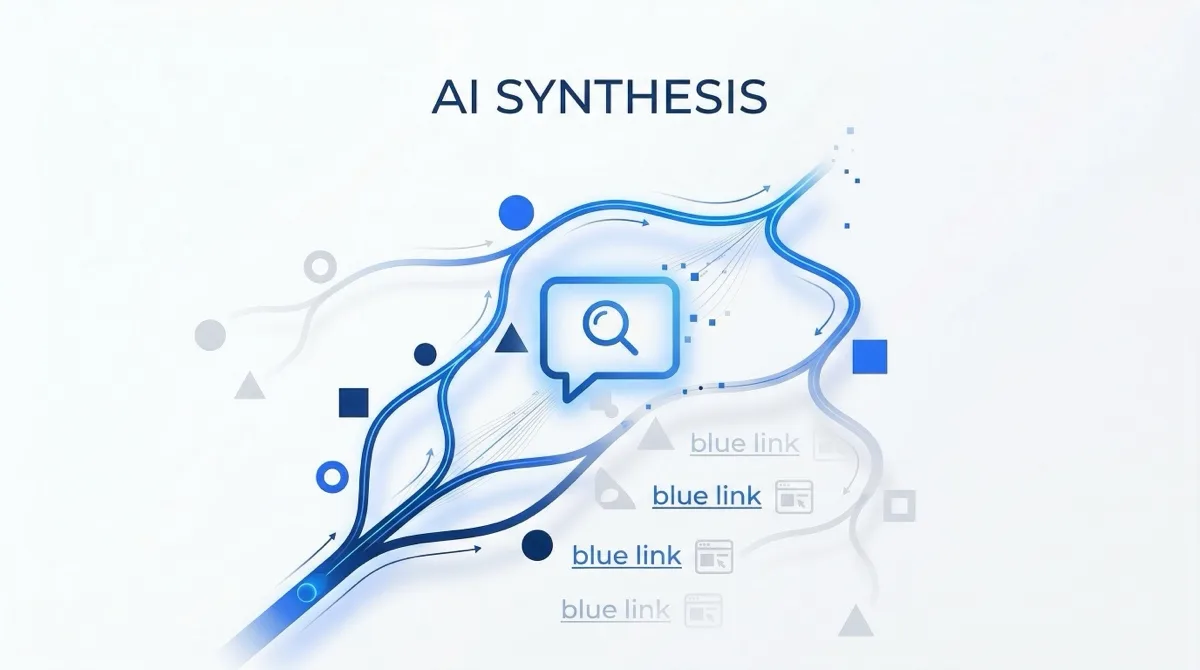
The Click is no Longer the Goal
For two decades, digital marketing revolved around a single metric: the click.
SEO strategies focused on ranking pages. Paid ads were optimized for CTR. Content marketing measured success through traffic.
But the rise of AI assistants, search summaries, and conversational interfaces has quietly changed the user journey.
Increasingly, users are getting their answers without visiting a website at all.
A consumer asks an AI assistant for the best accounting software. A search engine produces a synthesized summary with recommendations. A comparison tool generates a shortlist instantly.
The user receives the information they need without clicking through to any individual brand’s site.
This shift introduces a new reality for marketers:
Brand influence increasingly happens before - and sometimes instead of - a website visit.
What “Zero-Visit Visibility” Means
Zero-visit visibility describes situations where your brand is discovered, evaluated, or recommended inside an AI interface or search summary without the user visiting your site.
This includes surfaces such as:
- AI assistants (ChatGPT, Gemini, Claude, Grok, Perplexity)
- Search engine AI summaries
- Recommendation lists generated by AI
- Product comparison summaries
- Voice assistant responses
- Knowledge panels and structured summaries
In these environments, users often receive the conclusion first.
Instead of browsing multiple websites, they see something like:
- “Here are the three best CRM platforms for small businesses.”
- “These companies are known for strong AI analytics capabilities.”
- “The most recommended options include…”
If your brand appears in those summaries, you remain visible.
If it does not, your brand may be invisible even if your website ranks well in traditional search results.
Why Traditional Traffic Metrics are Becoming Misleading
Many companies still measure digital performance primarily through:
- Website traffic
- Organic search clicks
- Session growth
- Conversion rates
While these metrics still matter, they no longer capture the full picture of brand visibility.
In the AI era, users may:
- Discover your brand in a summary
- Compare you with competitors inside an assistant
- Form an opinion before ever visiting your website
This creates a new dynamic:
| Traditional metric | What it misses |
|---|---|
| Website traffic | Brand exposure inside AI responses |
| Keyword rankings | Inclusion in recommendation lists |
| Click-through rate | Whether AI systems cite your brand |
| Session growth | Whether AI assistants position you as a leader |
A decline in clicks does not necessarily mean a decline in influence.
In many cases, it reflects a change in where the evaluation happens.
How AI Systems Decide Which Brands Appear
AI-generated summaries do not pull from a single page. They synthesize information from multiple signals across the web.
Common signals include:
- Authoritative website content
- Third-party articles and reviews
- Structured data and directories
- Customer feedback and reputation signals
- Mentions in industry publications
- Comparison content
- Community discussions
These signals combine to form a narrative profile of your brand.
When an AI system generates a recommendation or summary, it selects brands that appear:
- credible
- consistently described
- widely referenced
- contextually relevant to the question
This means visibility depends less on one optimized page and more on your brand’s overall information footprint.
Strategies for Zero-Visit Brand Visibility
Adapting to the zero-visit era requires shifting from page-level optimization to narrative presence across the digital ecosystem.
1. Strengthen Authoritative Source Content
Your website still plays a critical role.
AI systems often use brand websites as foundational sources for understanding:
- positioning
- capabilities
- product categories
- differentiators
Focus on pages that clearly communicate:
- what your company does
- who it serves
- how it differs from competitors
- measurable outcomes and proof
Clear, structured content improves the likelihood that AI systems correctly interpret your brand.
2. Build Distributed Authority Signals
AI summaries frequently reference third-party sources.
These may include:
- industry publications
- comparison sites
- directories
- analyst reports
- expert blogs
- community forums
A brand that appears across multiple trusted sources becomes easier for AI systems to recognize as credible.
This is why earned media and authoritative mentions matter more than ever.
3. Control Your Positioning Narrative
If your brand narrative is inconsistent across the web, AI systems will synthesize a fragmented description.
For example, your website may emphasize:
“Enterprise-grade analytics platform.”
But third-party sources might describe you as:
“Mid-market reporting software.”
When AI systems aggregate those signals, the resulting narrative may not match your intended positioning.
Consistent messaging across:
- website content
- PR coverage
- partner pages
- directories
- product descriptions
helps ensure AI systems generate the correct narrative.
4. Create Comparison-Friendly Content
AI assistants frequently generate shortlists and comparisons.
Brands that appear clearly in comparison contexts are more likely to be recommended.
Content that helps includes:
- category comparison pages
- “best tools for…” articles
- structured feature breakdowns
- competitor comparison guides
These formats help AI systems understand:
- how your brand fits the category
- when it should be recommended
- what differentiates it from alternatives
5. Monitor AI Perception Regularly
AI brand narratives evolve continuously.
Competitors publish new content. Reviews accumulate. New sources influence AI models.
This means your brand perception in AI systems can shift quietly over time.
Monitoring queries such as:
- “Best tools for [category]”
- “[Brand] vs competitors”
- “Top companies in [industry]”
reveals how AI platforms currently describe and rank your brand.
Without monitoring, narrative drift can go unnoticed.
The New Oobjective: Presence Before Traffic
The goal of modern digital visibility is no longer just getting users to your website.
Instead, it is ensuring your brand appears when AI systems summarize your category.
This requires a shift in thinking:
| Old mindset | New mindset |
|---|---|
| Optimize pages for clicks | Optimize narratives for summaries |
| Focus on rankings | Focus on inclusion |
| Measure traffic | Measure AI visibility |
| Control your website | Influence the broader information ecosystem |
Clicks may decline as AI interfaces mature.
But brand influence can increase - if your brand remains present in the answers users see.
The Future of Digital Visibility
Search is evolving from a list of links into a layer of synthesized knowledge.
In that environment, the brands that win visibility are not simply those with the best-ranked pages.
They are the brands whose reputation, positioning, and authority signals are strong enough to be summarized confidently by AI systems.
The click may be disappearing.
But the opportunity for brand visibility has never been larger - it has simply moved to a new surface.
Understanding that shift is the first step toward thriving in the zero-visit era.
Frequently Asked Questions
What should you check first?
Start by testing the prompts your buyers are most likely to ask. Look for whether your brand appears, how it is described, which competitors appear beside it, and whether the answer points to credible sources.
How often should teams review this?
Monthly is the minimum useful cadence for most teams. Weekly reviews make sense during launches, competitive campaigns, PR activity, or any period where AI-generated answers could shift quickly.
How can AI Brand Report help?
AI Brand Report runs structured prompt checks across major AI engines, tracks brand and competitor visibility, and turns the results into a prioritized list of actions so your team can improve how AI systems describe and recommend your brand.
Practical Example
A marketing team can start with a focused baseline: choose 10 to 20 buyer prompts, run them across the major AI engines, and record whether the brand appears, how it is described, and which competitors are recommended instead.
From there, the team can prioritize the highest-impact gaps: unclear positioning, missing comparison content, weak third-party mentions, outdated review signals, or pages that do not answer buyer questions directly enough for AI systems to cite.
Check Your AI Visibility
If you want to see how AI systems describe and recommend your brand today, start with a free AI visibility report. AI Brand Report checks your presence across major AI engines, compares your visibility against competitors, and highlights the gaps most worth fixing first.
Get your free AI visibility report.